Core Thinking Frameworks
Most organizations do not have a lack of information. They have a lack of clear thinking.
This section includes a small number of frameworks and influences that shape how I approach leadership, performance, and human behavior.
These are models I use to help leaders think more clearly, improve decision quality, and operate more effectively in complex environments.
Process Over Outcomes
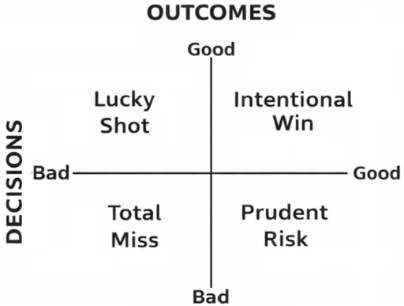
Most organizations judge decisions based on outcomes.
That is a mistake.
Good outcomes can come from poor decisions, and poor outcomes can come from sound thinking. When leaders focus only on results, they reinforce luck, hide weak thinking, and create inconsistency over time.
This model shifts the focus to the quality of the decision process. It separates how a decision was made from how it happened to turn out.
The goal is to build disciplined thinking, not chase results. Because over time, strong process produces better outcomes, while weak process eventually fails, no matter how good the short term results look.
Conflict Management Framework
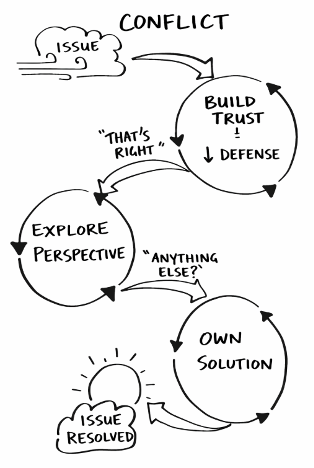
Most teams either avoid conflict or handle it poorly. Conflict is actually key to high performing teams and innovation.
This framework treats conflict as a signal, not a problem. The focus is on reducing defensiveness, exploring perspective, and helping people take ownership of solutions rather than pushing positions.
When conflict is handled well, trust increases and decisions improve. When it is avoided or mishandled, tension builds and performance suffers.
Empathy Model
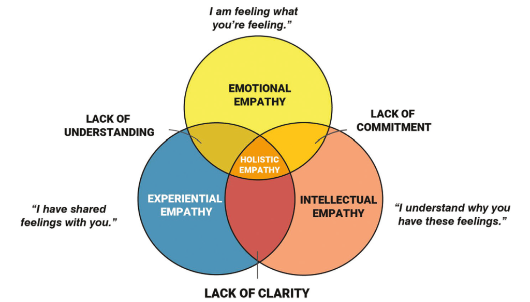
Empathy is often misunderstood as simply relating to how someone feels.
This model breaks it into three dimensions. Emotional empathy connects to what someone is feeling. Intellectual empathy understands why they feel that way. Experiential empathy draws from shared experience.
When these are combined, leaders gain clarity, build commitment, and avoid the gaps that lead to misunderstanding and poor execution.
What Shaped My Thinking
The way I approach my work has been shaped by experience, exposure, and deliberate learning across multiple disciplines.
Alan Weiss
Coaching, books, and workshops.
Alan’s influence has been significant, particularly in how to think clearly, challenge assumptions, and focus on creating value rather than proving you are right.
Agile Leadership Journey
This shifted my perspective from control and process toward adaptability, learning, and responsiveness in complex environments.
Daniel Pink
His work on motivation, autonomy, mastery, and purpose provided a useful lens on what actually drives behavior at work.
Atomic Habits
The idea that small, consistent changes shape behavior over time reinforced the importance of environment and systems in sustaining performance.
Power vs Force
This introduced a different way of thinking about energy, influence, and how people respond to pressure versus alignment.